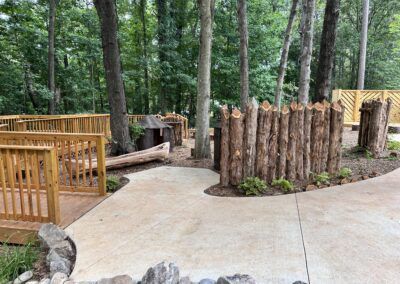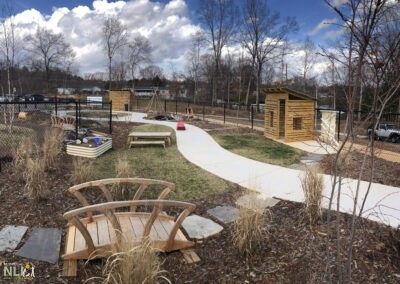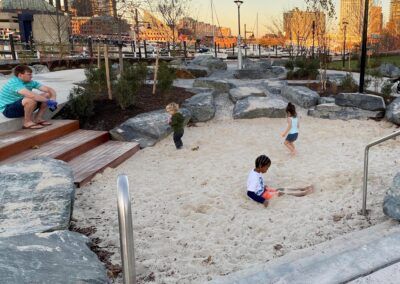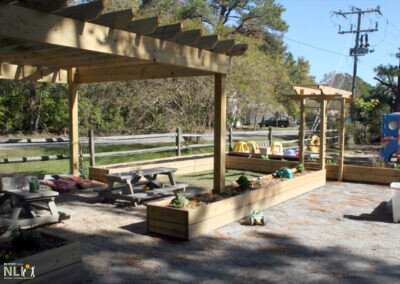
NLI provides design assistance, design review, and professional development services to private and public institutions that offer formal and nonformal education and cultural services to children. These services help institutions create high-quality outdoor learning environments by collaborating with community partners, including landscape architects, to develop model, research-based, and ecologically viable outdoor settings. NLI believes effective design is a community-based process that engages all relevant stakeholders in establishing a project mission, vision, and design objectives. Through this collaborative approach, NLI develops consensus-based design solutions tailored to each project’s needs and goals. Fees for design assistance and related services are based on the scope and level of support required.
Fundraising for outdoor learning environments relies on building strong community relationships and engaging potential supporters before making financial requests. Centers should begin by cultivating support among staff, board members, parents, current and former donors, local businesses, civic organizations, educational institutions, and foundations. Funding can be secured through business contributions, grants, sponsorships, donated materials and services, special events, annual appeals, and online giving. A compelling fundraising effort should clearly communicate the project’s impact on children’s health, development, and learning, supported by photographs, design plans, and other project materials. Websites and social media can further promote project progress, share success stories, and encourage donations and volunteer participation. Ultimately, successful fundraising is an ongoing process of friend-raising, community engagement, and relationship building that generates the financial, material, and volunteer resources needed to create and sustain high-quality outdoor learning environments.


Projects
Projects are typically concentrated, short-duration efforts that focus on specific design issues or involve a single aspect of a program (e.g., design assistance, evaluation, professional development or policy initiative).
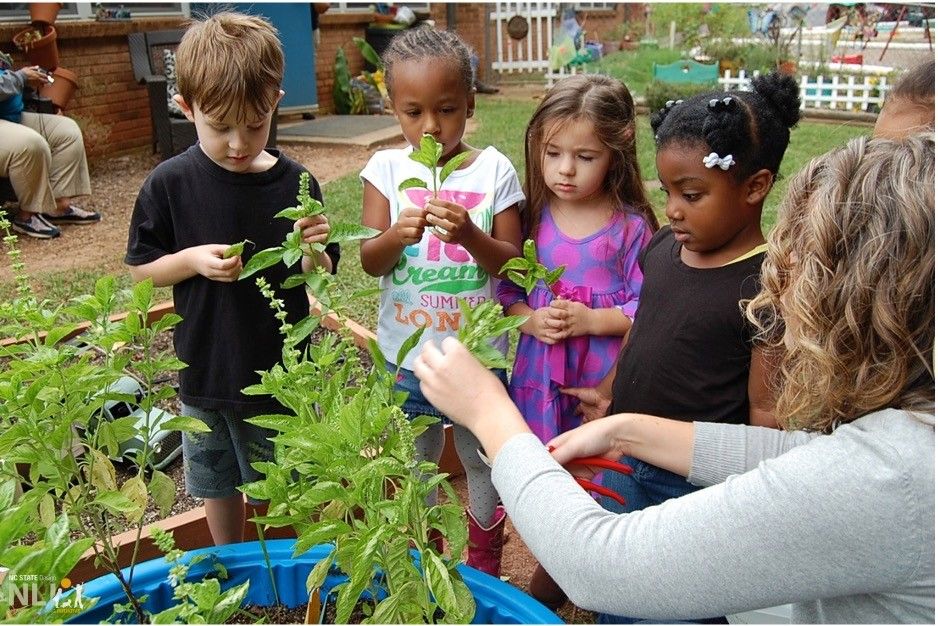
“The kids love talking about the garden, they are excited about it and the garden extends their science and nature learning.”