NC State’s one-of-a-kind UV lamppost
The lamppost by the Bee Vision installation is the only one on campus with a UV bulb! Why? It replaced the tungsten bulb that washed out UV fluorescence on the installation.
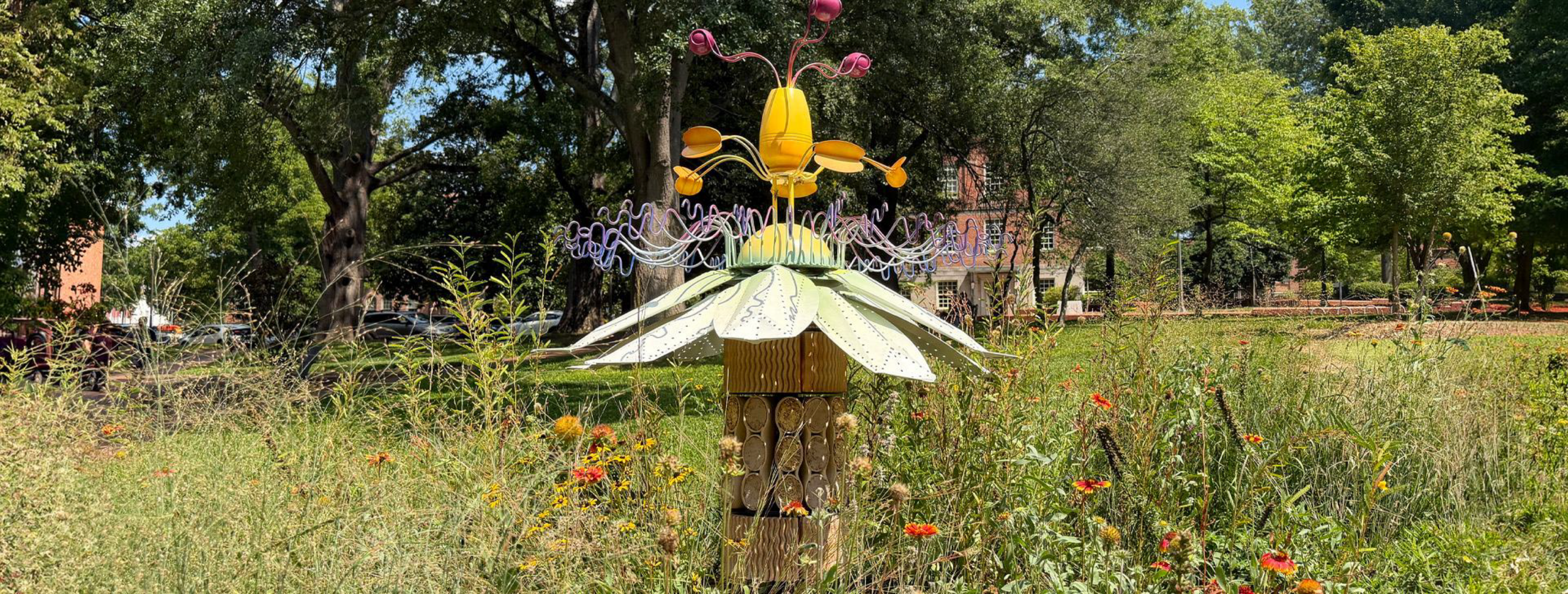
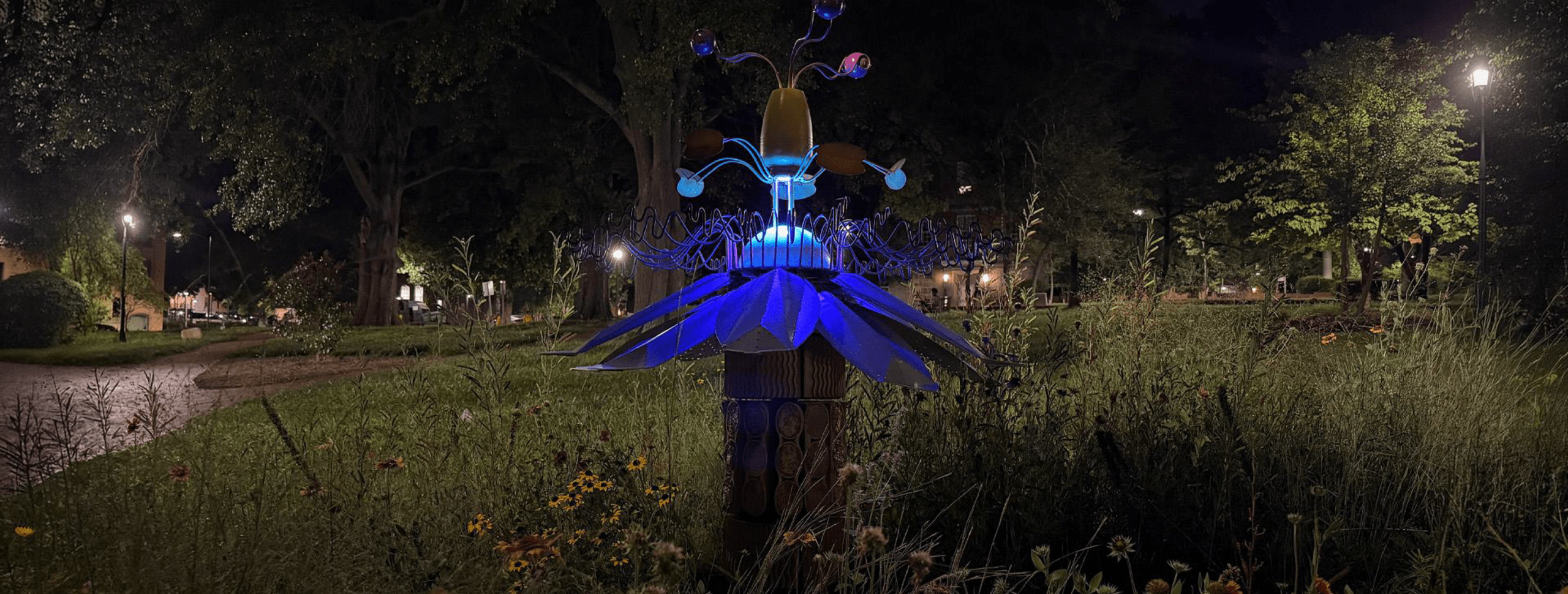
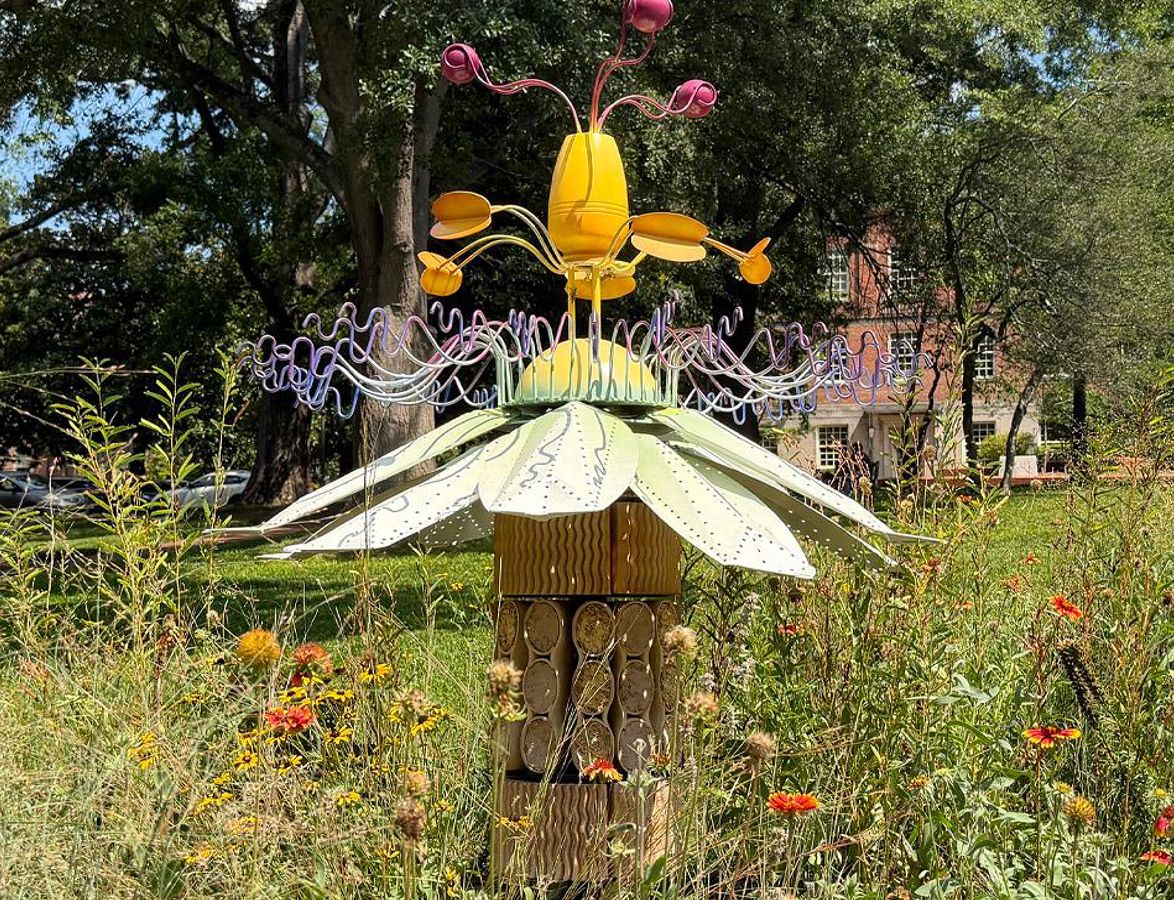
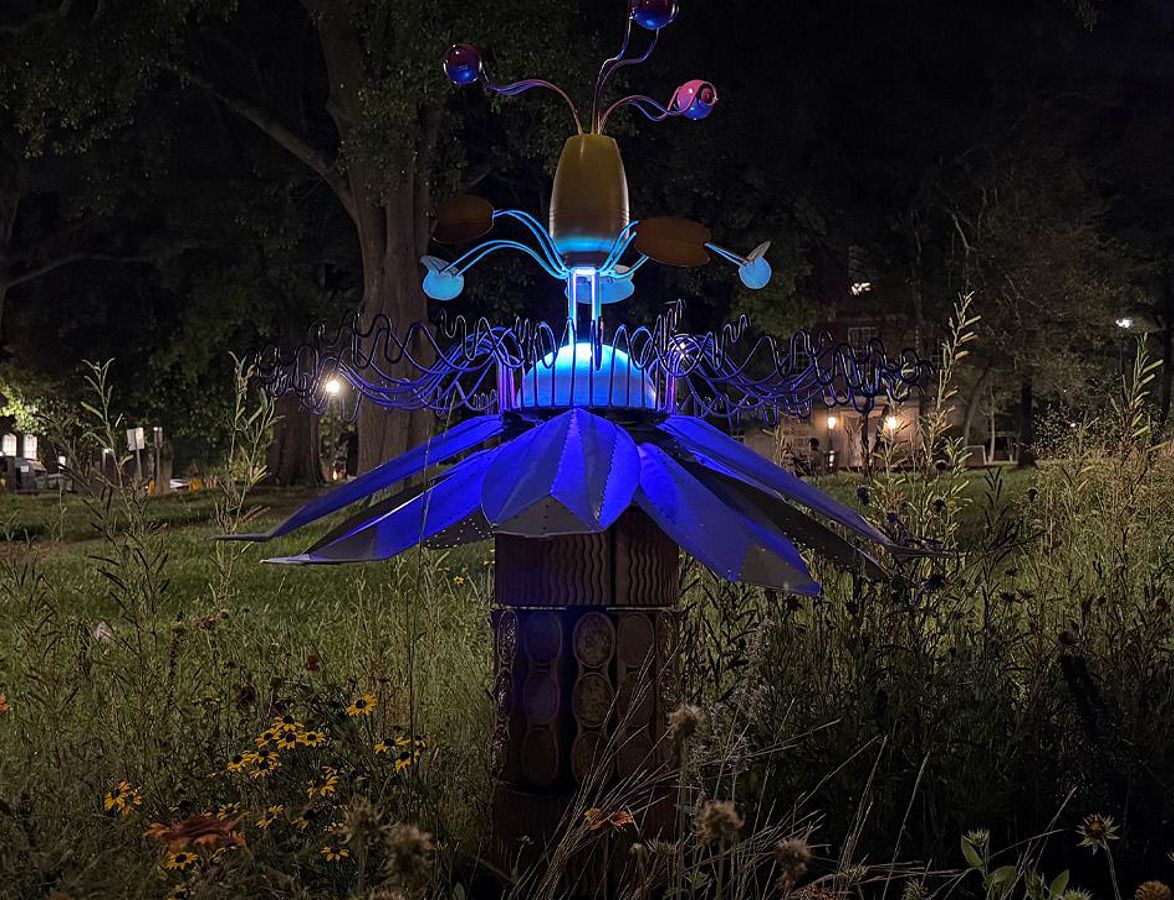
The lamppost by the Bee Vision installation is the only one on campus with a UV bulb! Why? It replaced the tungsten bulb that washed out UV fluorescence on the installation.
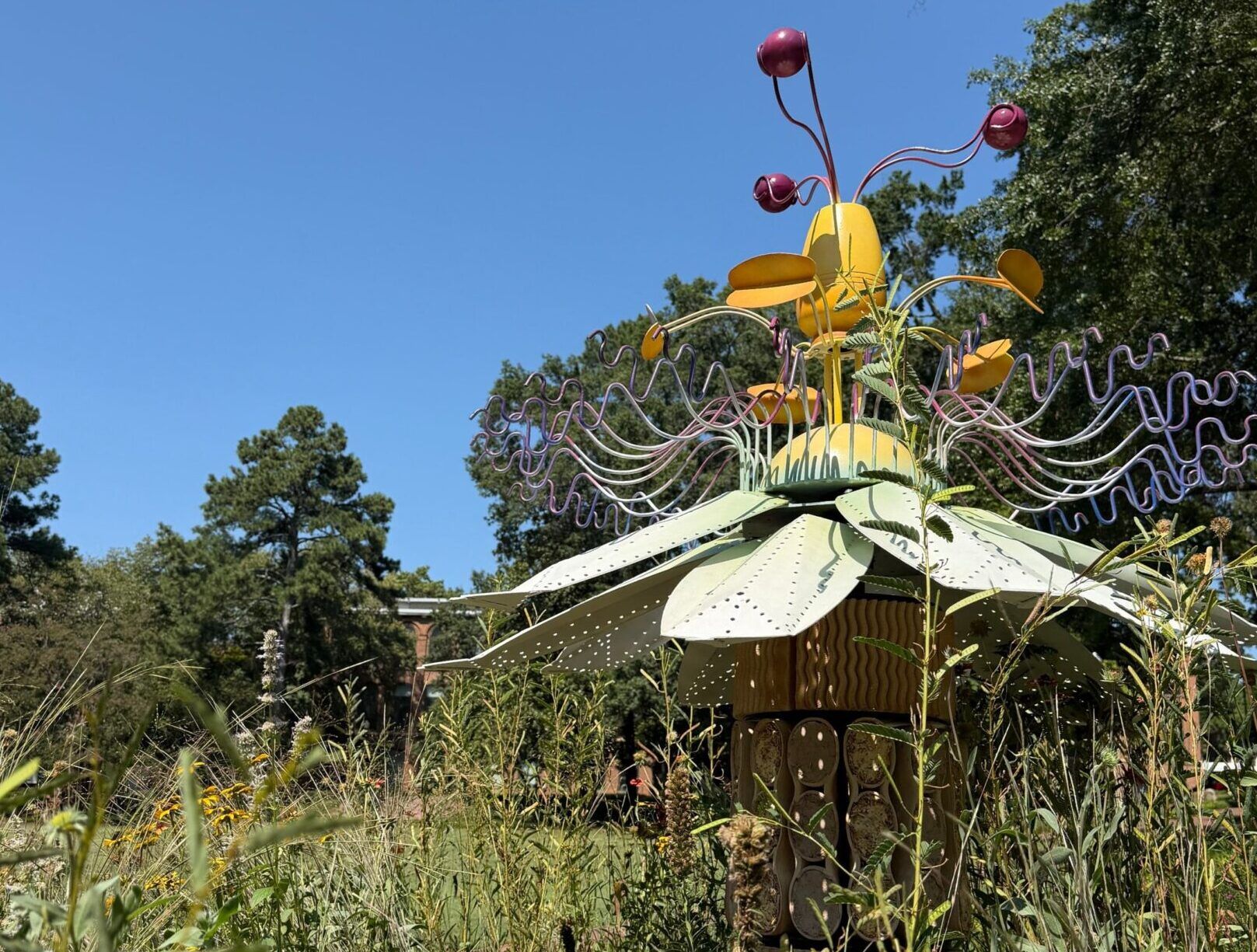
A living sculpture exploring pollinators, perception, and the landscapes we share.
Seeing on Another Wavelength: Bee Perception
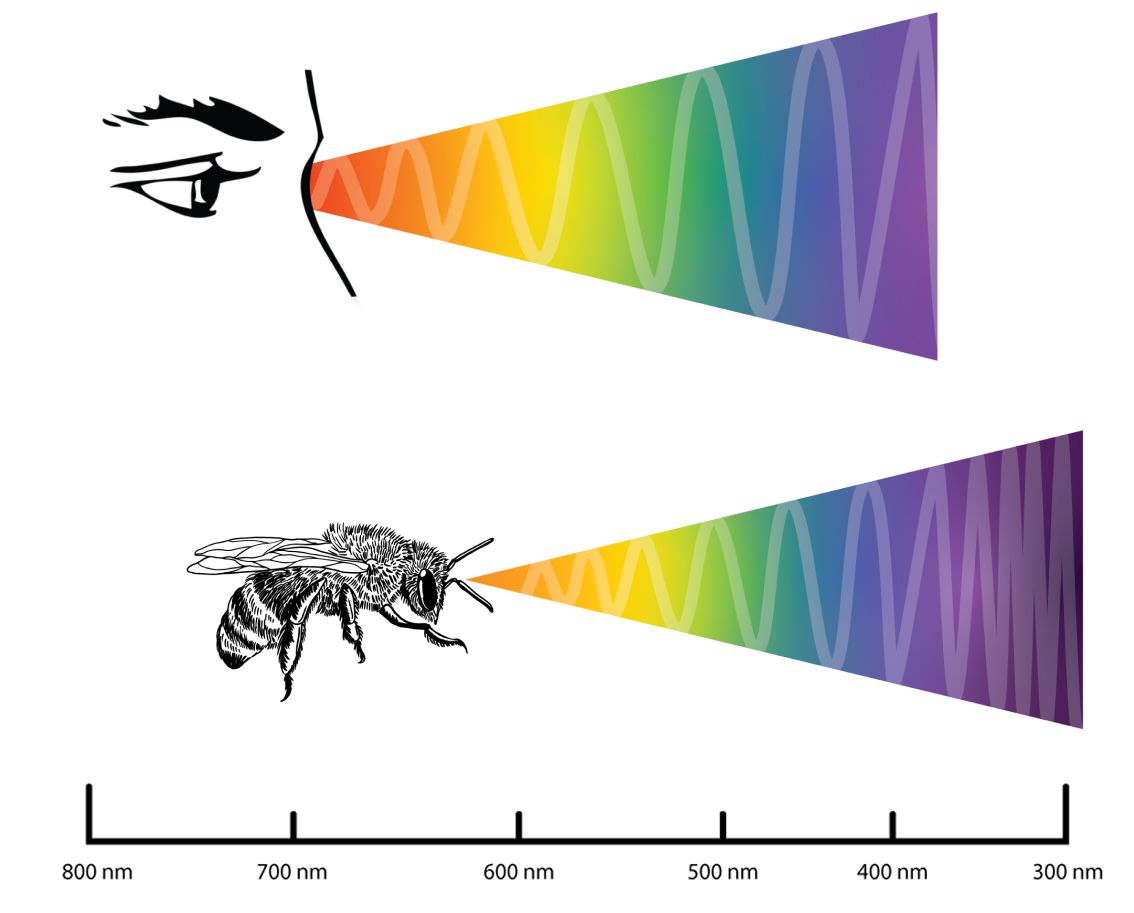
A flower is not the same object to every viewer. Human eyes respond to red, green, and blue wavelengths. Bees see green, blue, and ultraviolet, revealing contrasts and patterns that remain invisible to us.
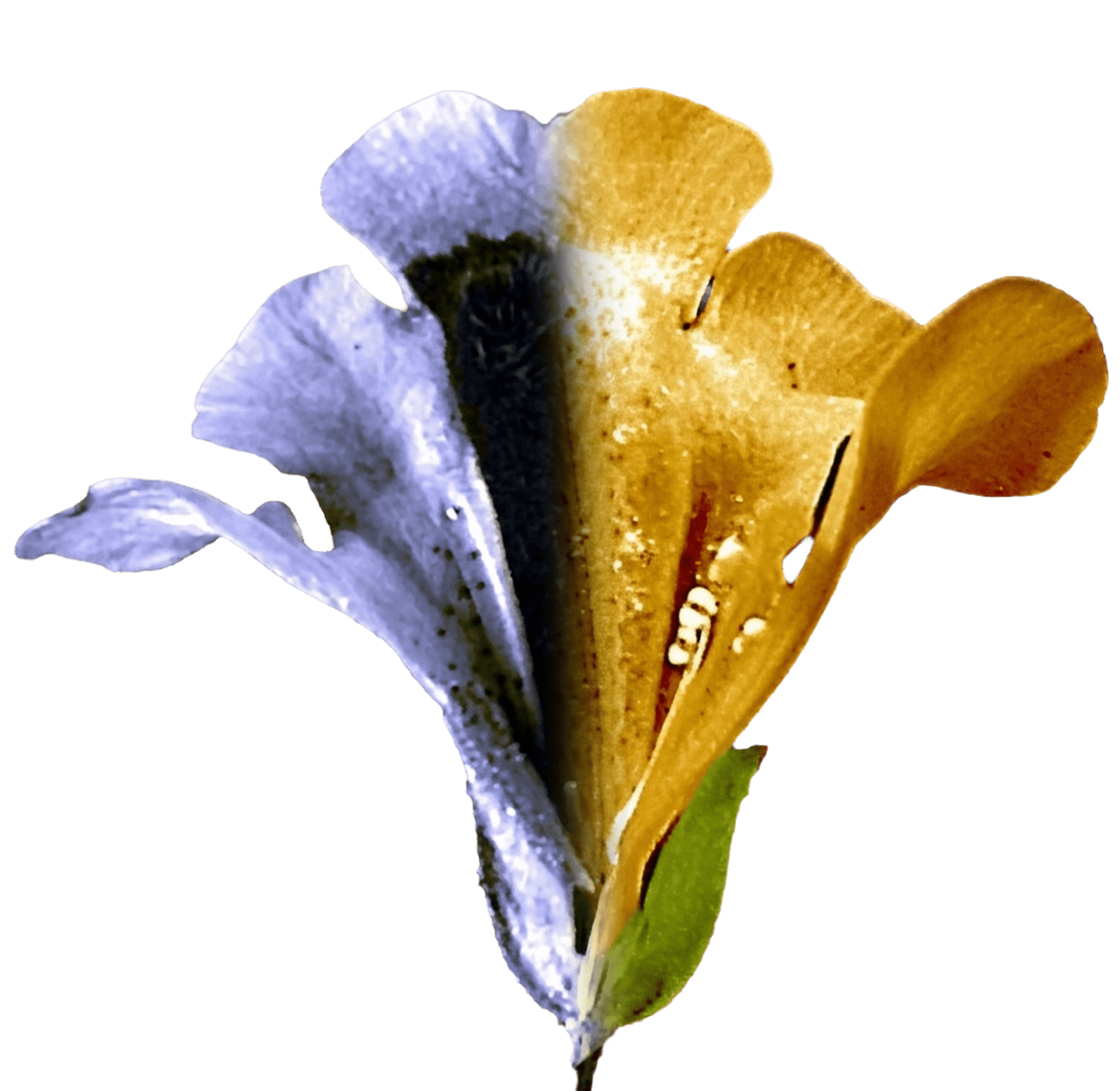
What appears to be a single-colored petal may become a vivid map of edges, landing zones, and pathways toward nectar and pollen. These ultraviolet markings are often called nectar guides, but vision is only one part of how bees encounter flowers. Color, scent, shape, texture, temperature, and even subtle electric fields overlap to form a multisensory invitation.
Bee Vision asks us to pause at the limits of human perception and imagine the many signals moving through a landscape just beyond our sight.
Can Design Reveal an Invisible World?
One project, five systems.
Sculpture, illumination, planting, habitat, and interpretation operate together rather than as separate additions.
- Sculpture abstracts the radial complexity of a passionflower.
- Ultraviolet light suggests a visual world beyond human perception.
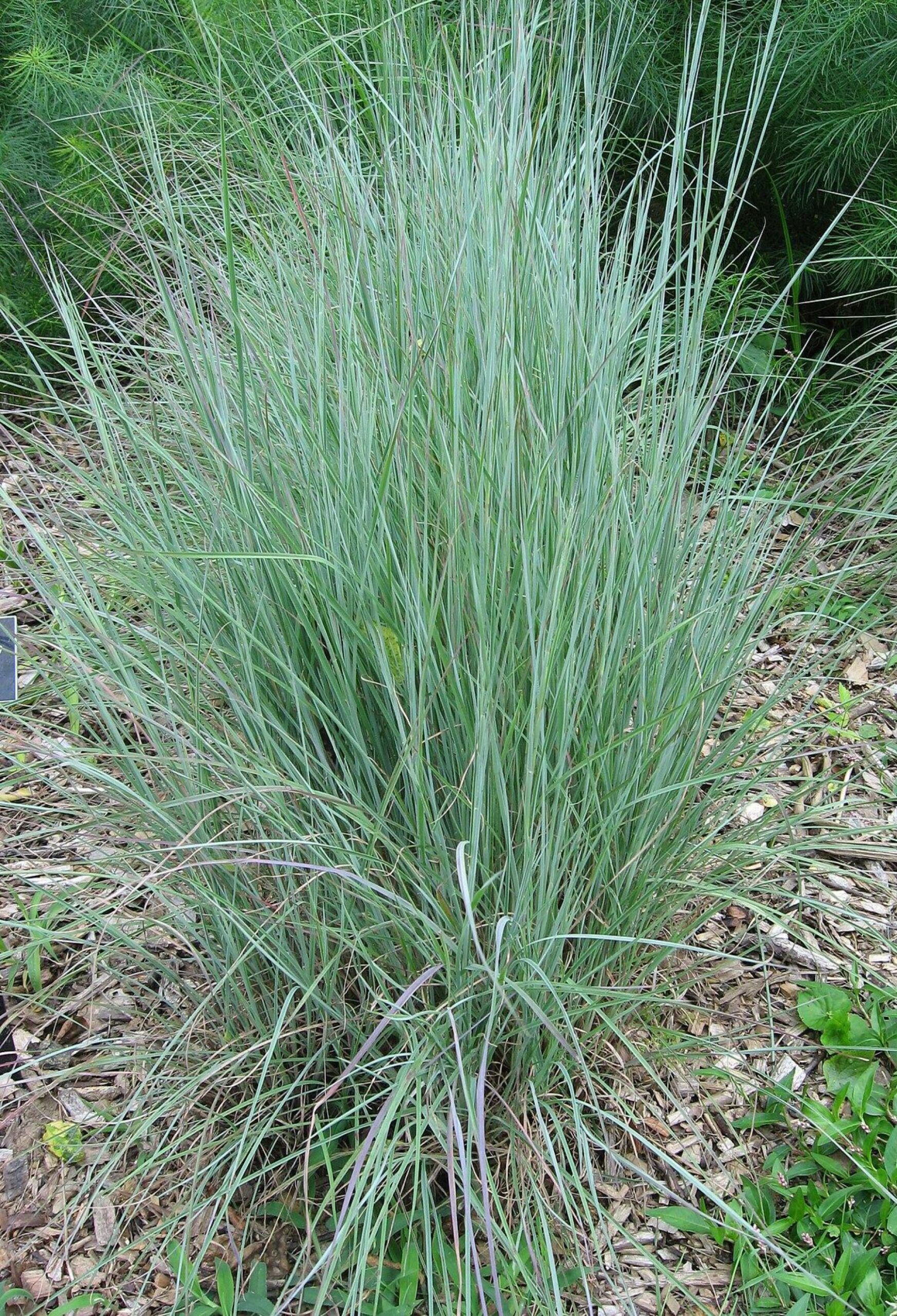
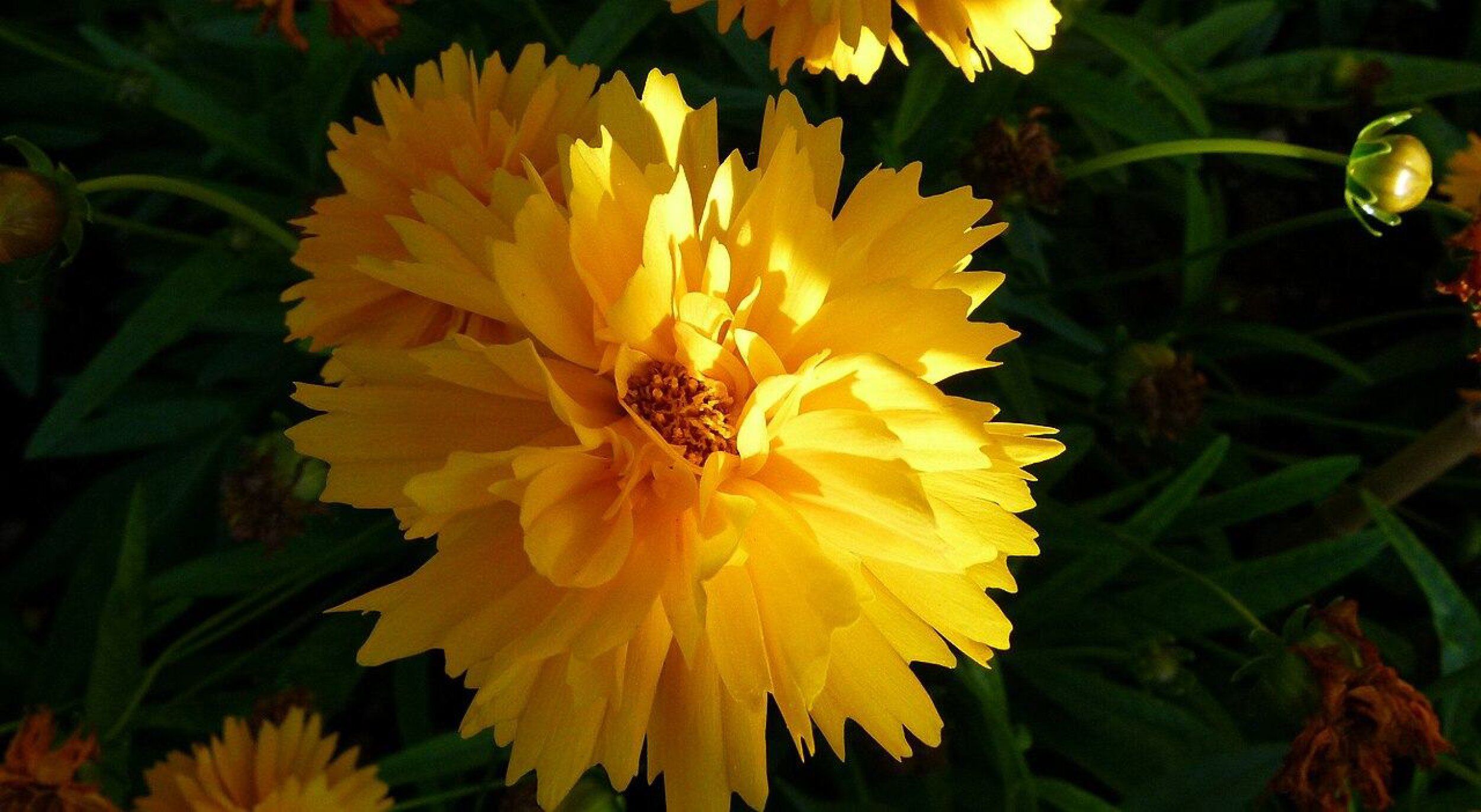
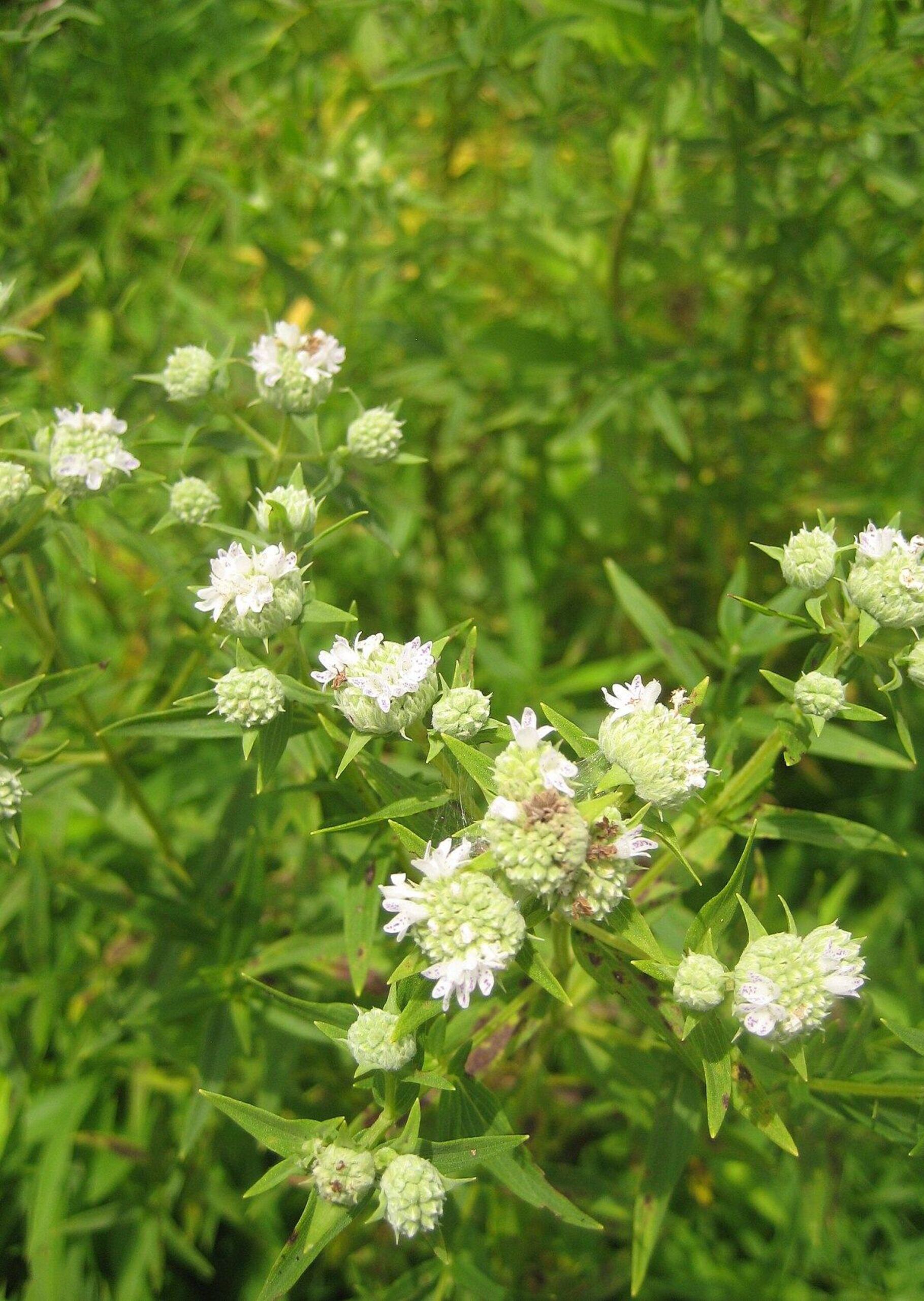
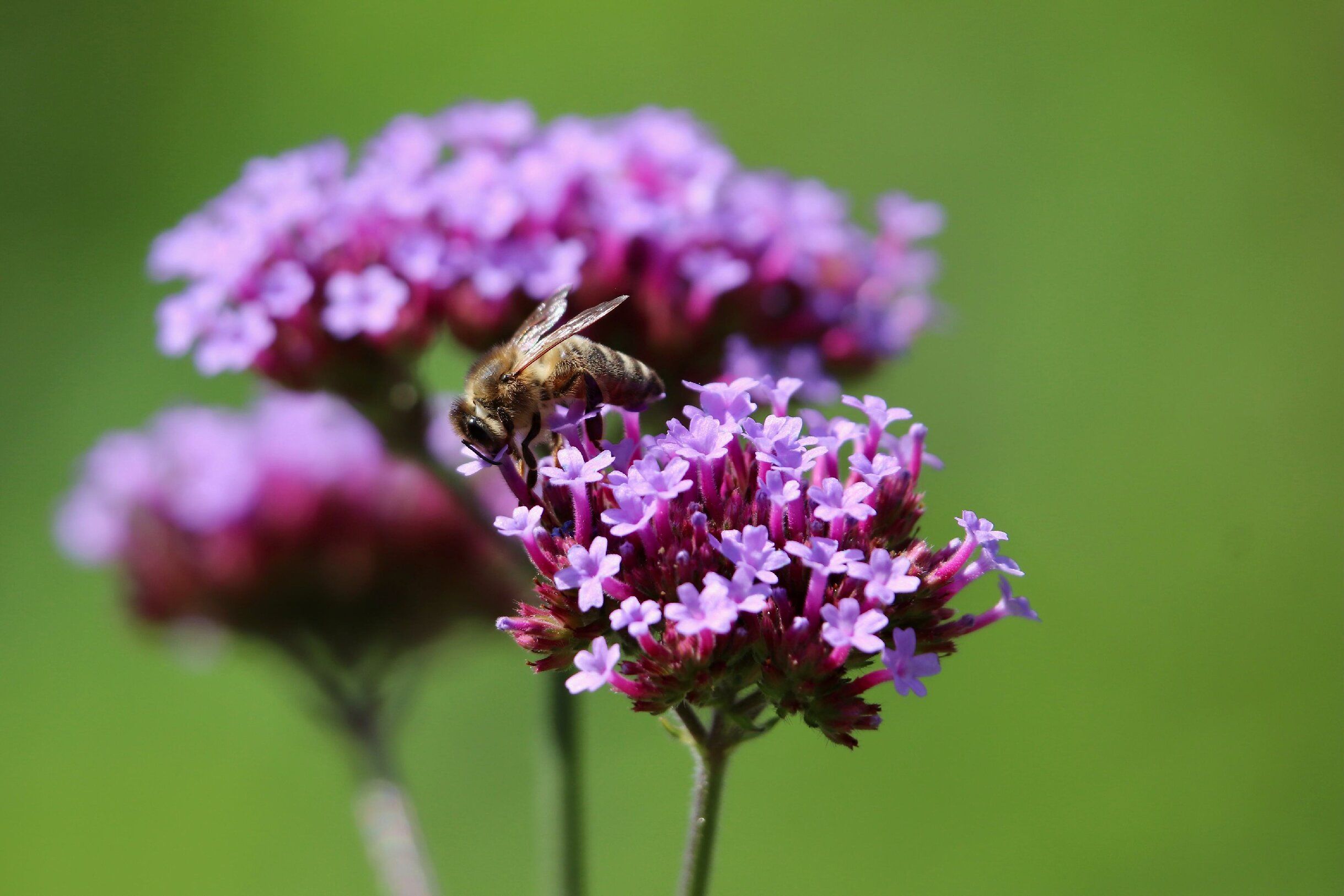
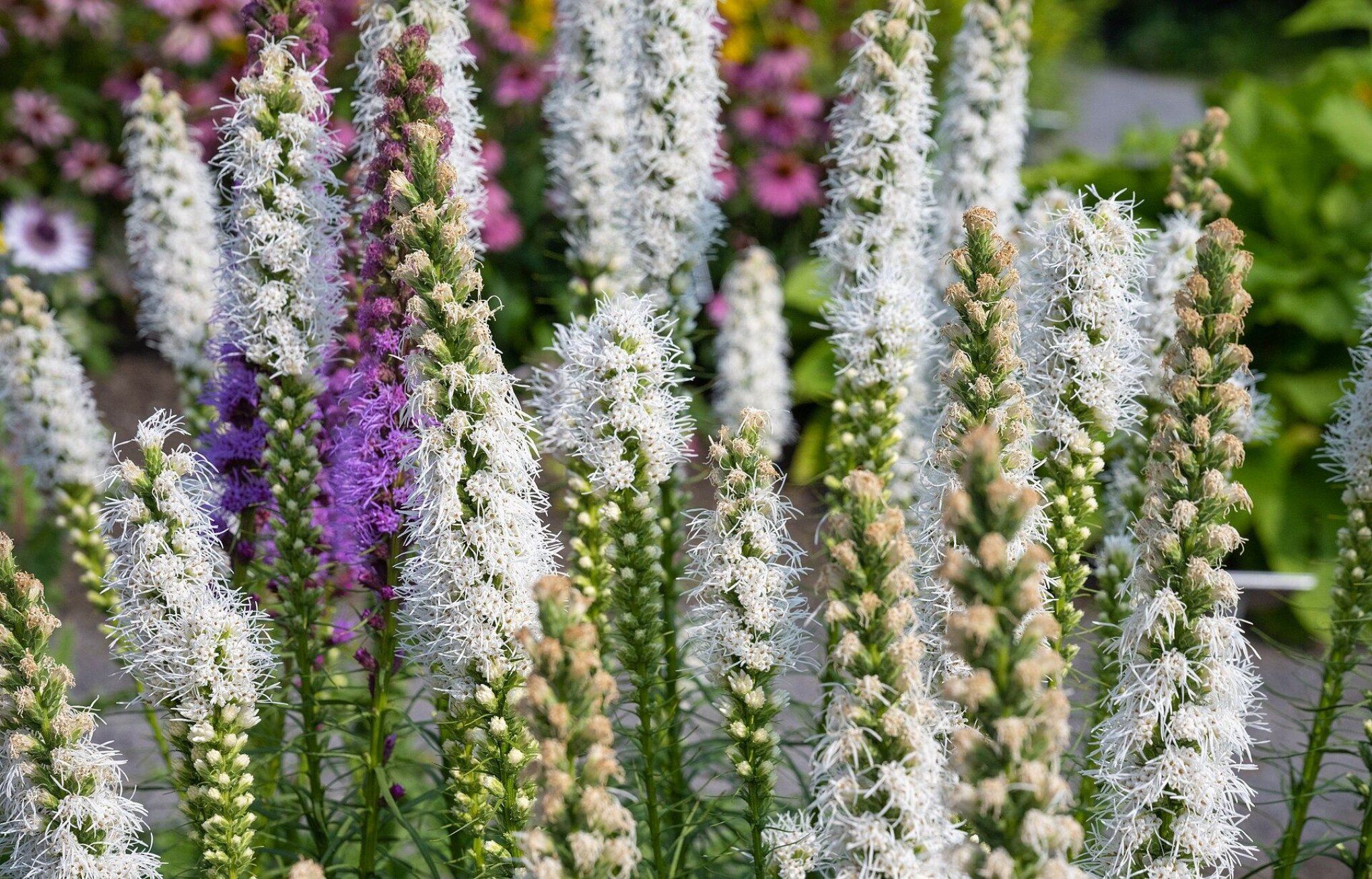
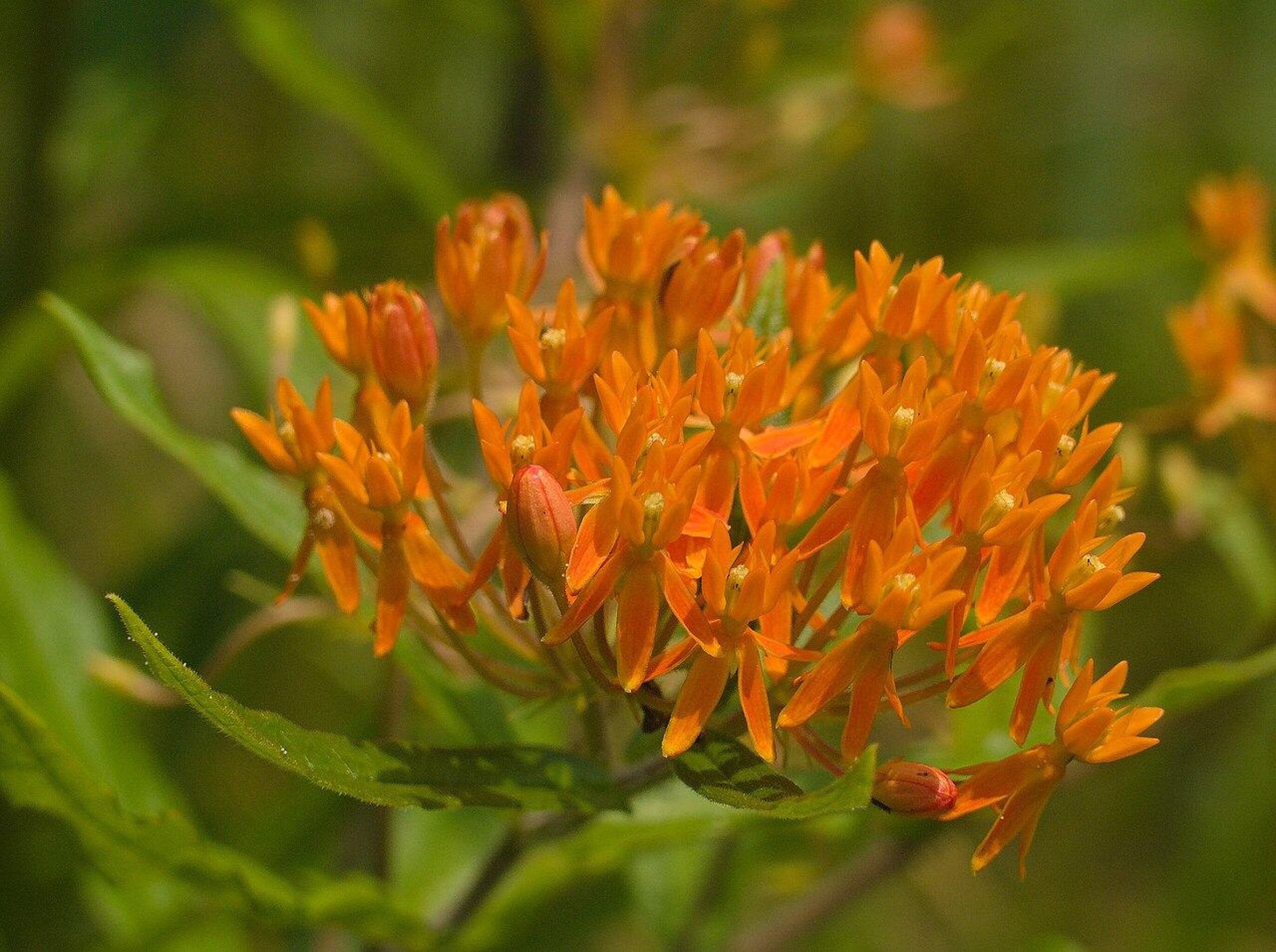
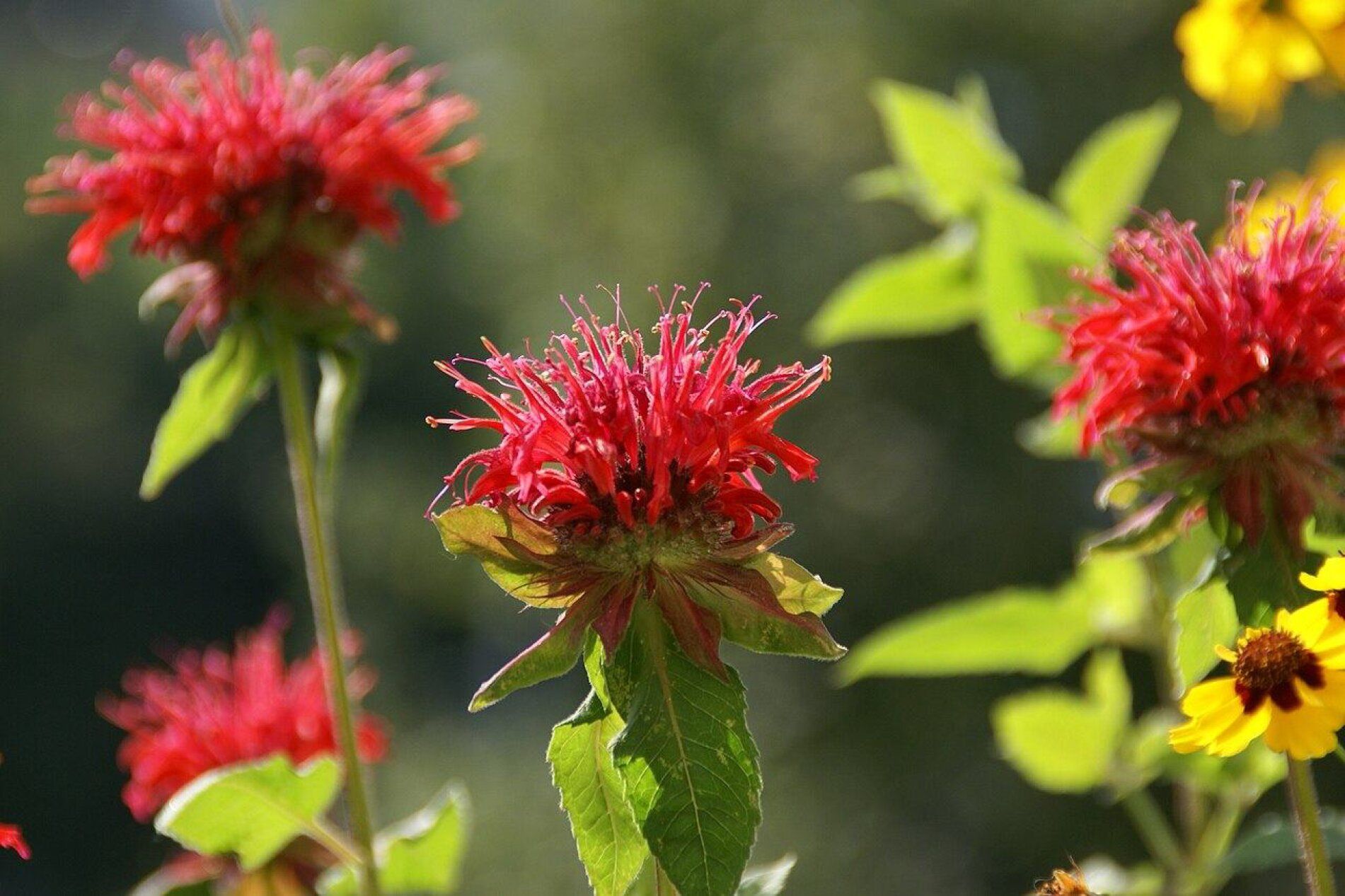
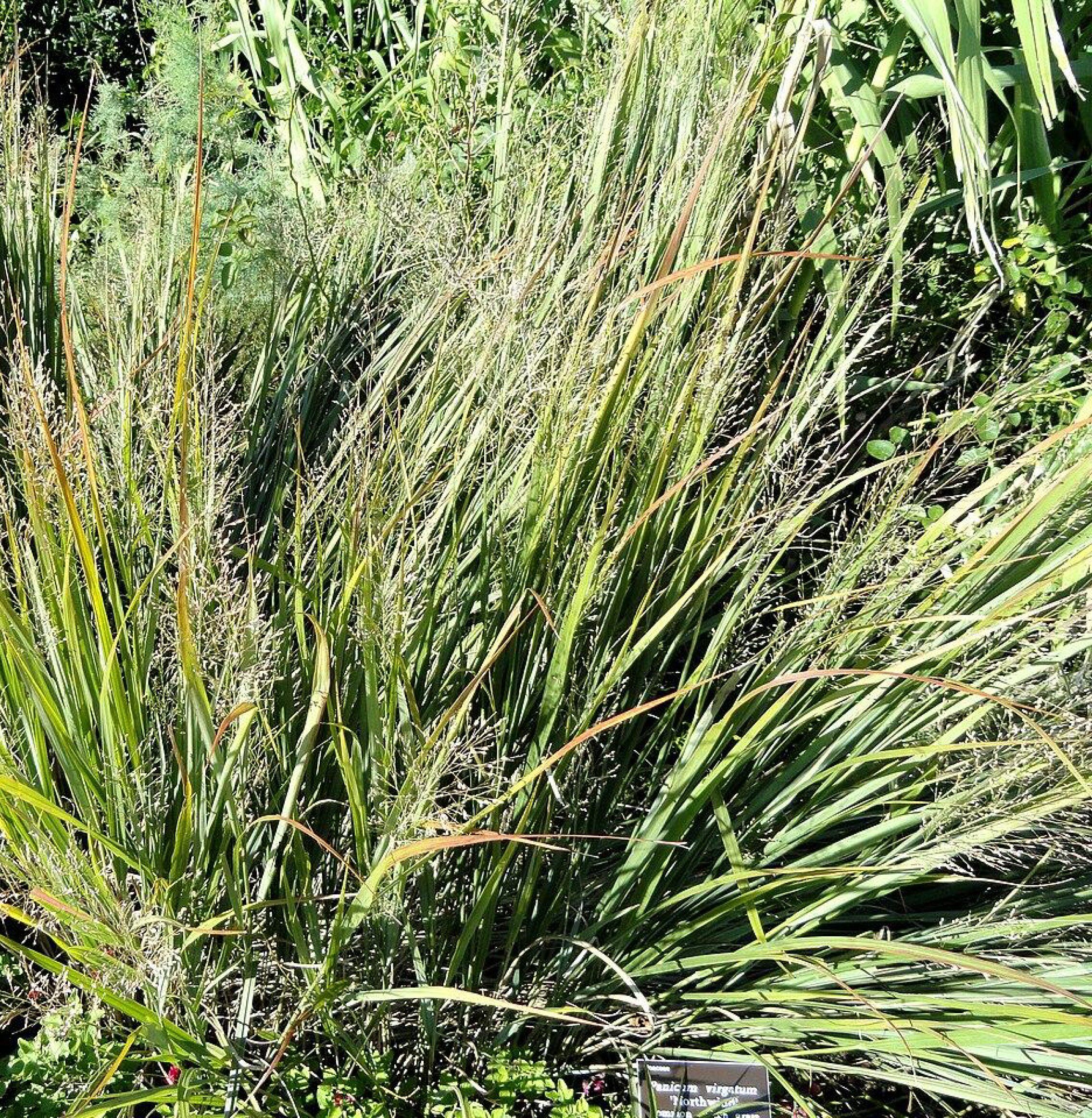
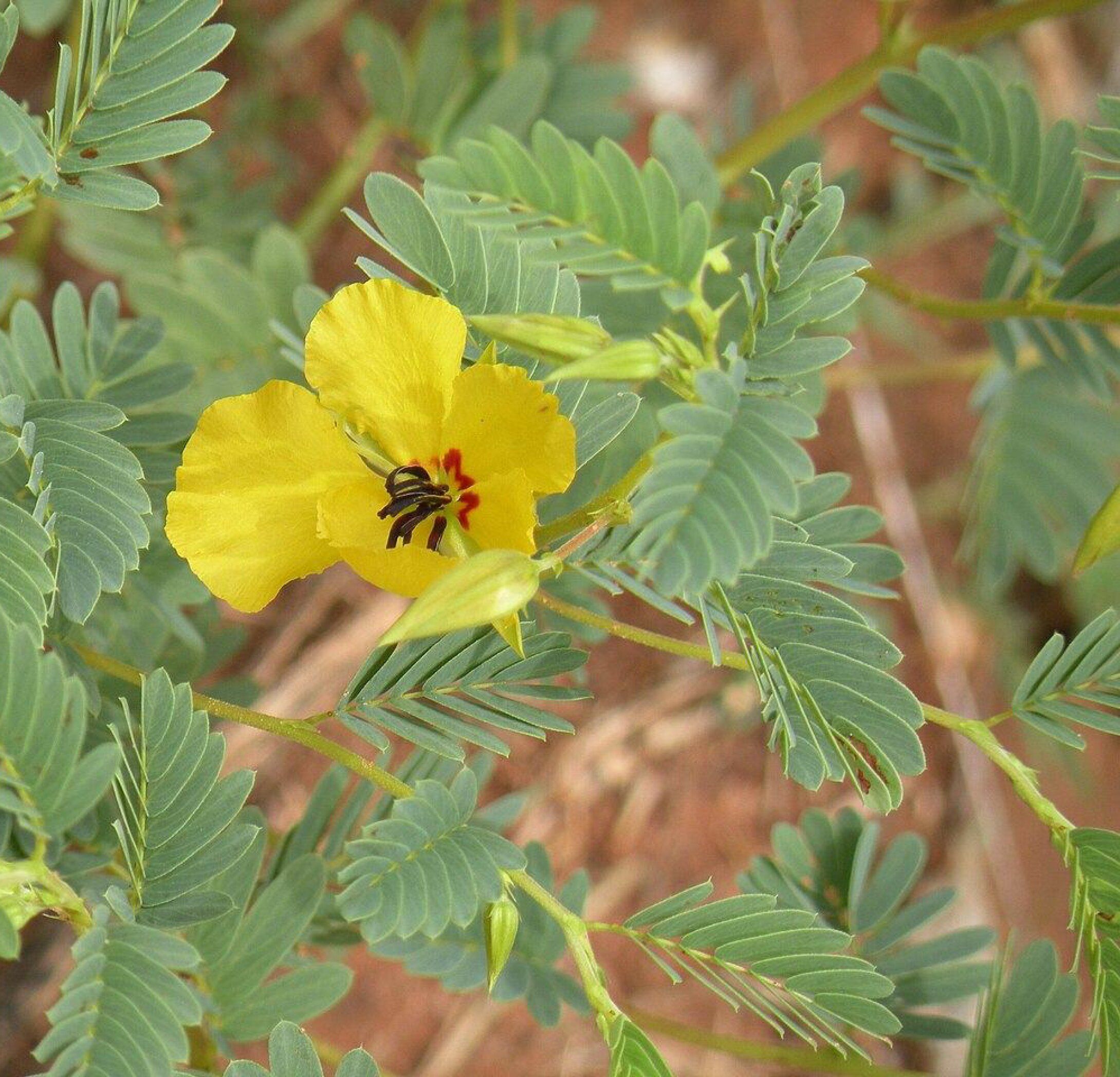
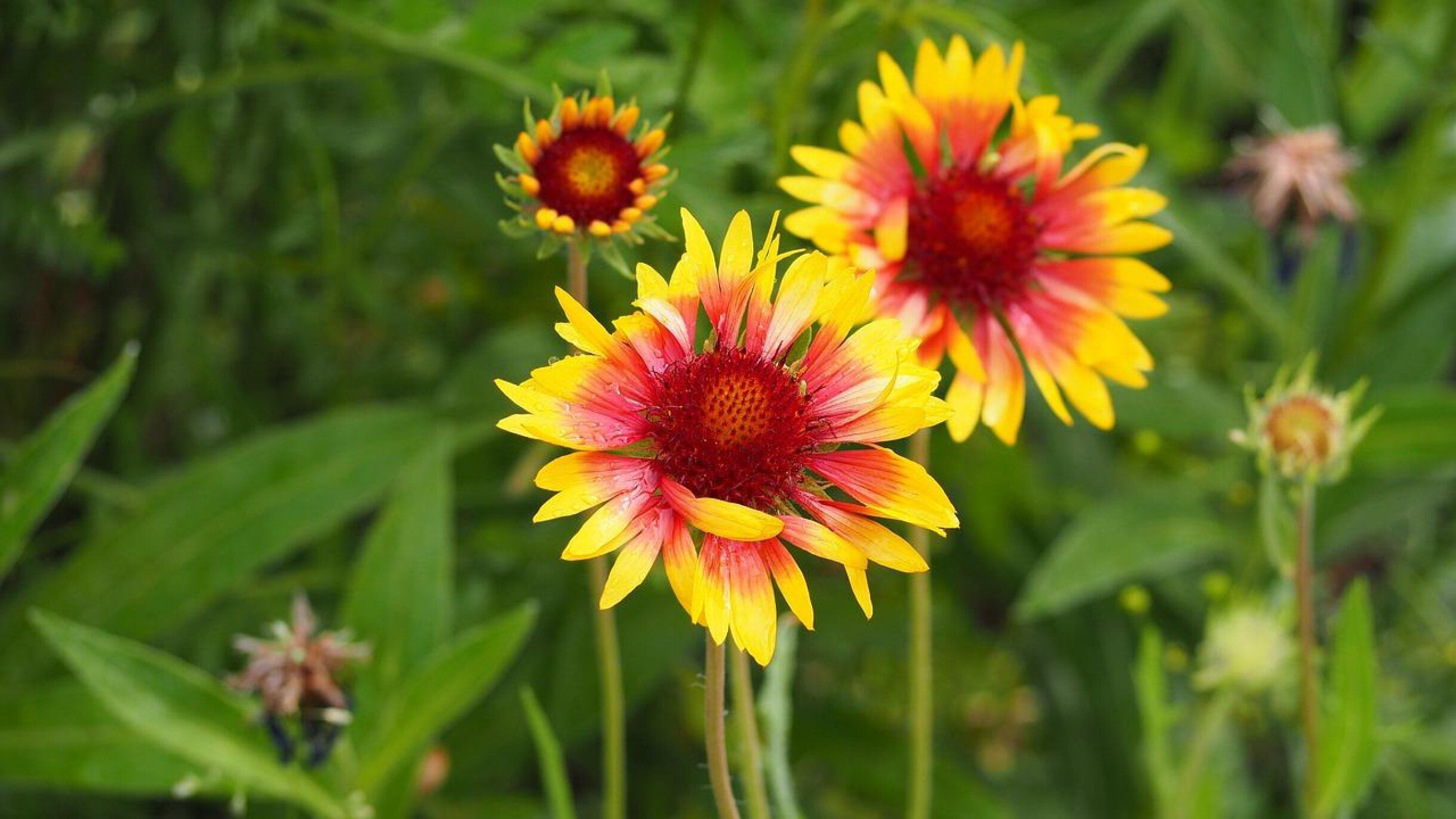
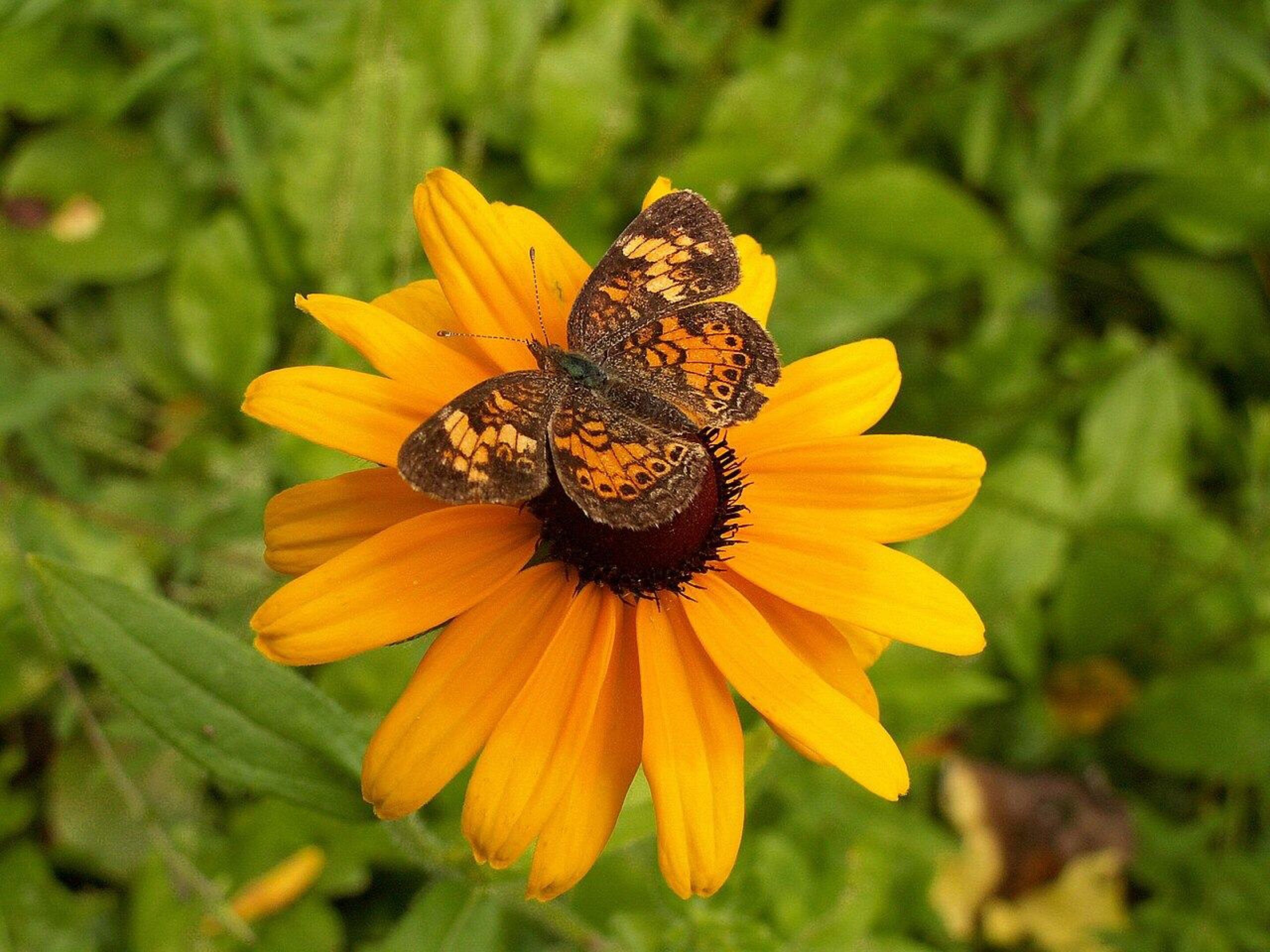
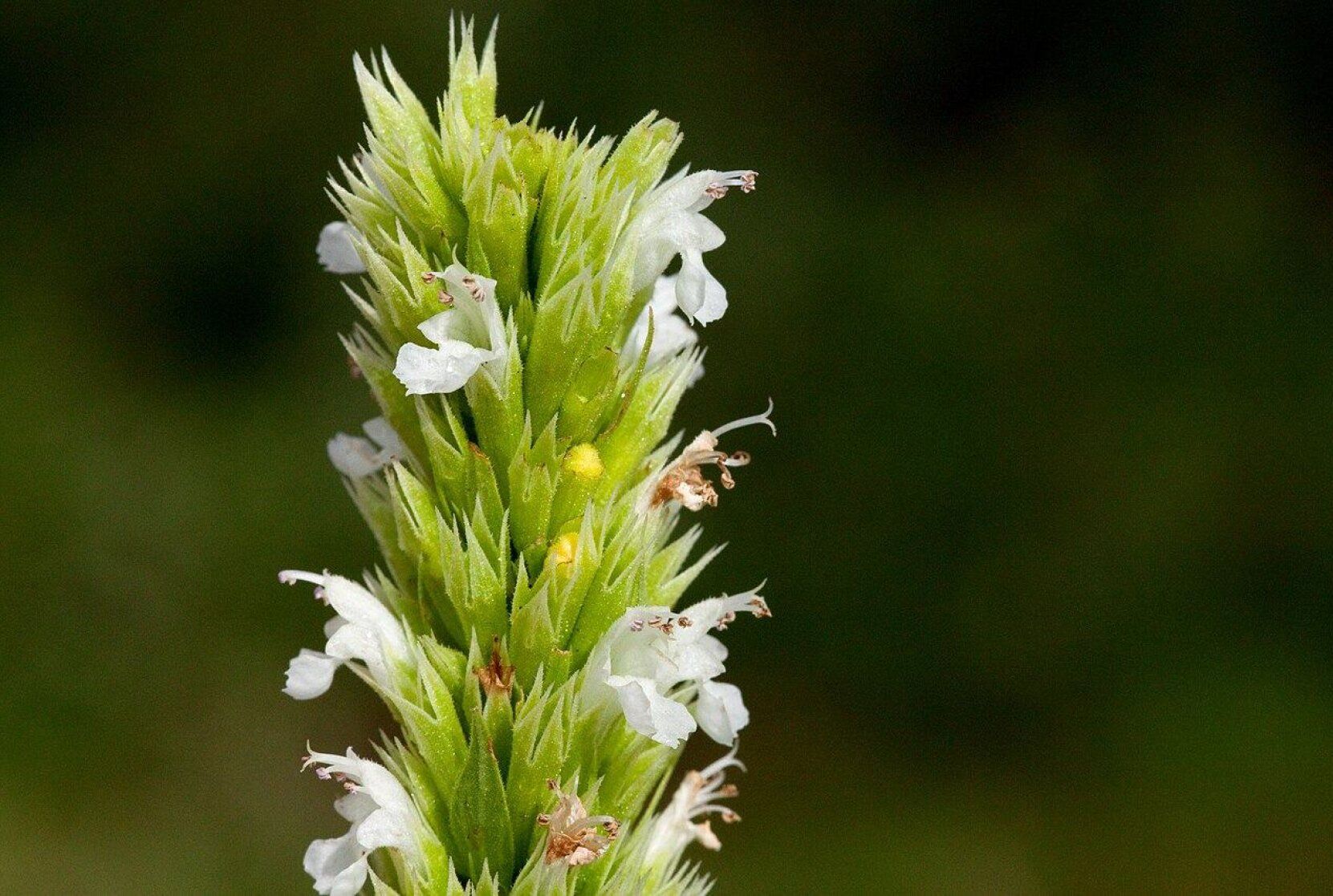
- Native plants provide real food and seasonal resources for pollinators.
- Nesting materials address habitat needs beyond flowers alone.
- Interpretation connects scientific research with direct observation and play.
Not Every Bee Lives in a Hive.
Most native bees are solitary. Instead of living with a queen and thousands of workers, one female bee finds a small nest, gathers pollen and nectar, lays an egg, and seals each young bee safely inside its own chamber.
About three out of four North Carolina bee species nest in soil, not in hives or bee hotels. But some solitary bees use hollow stems, beetle holes, and small cavities in wood. These are the bees a bee hotel can welcome.
The Bee Vision bee hotels are one part of a larger habitat. The native garden provides food; standing stems and open soil provide additional nesting places; and the ceramic cavities offer a close-up window into the hidden lives of solitary bees. Hotels work best when they are modest in size, protected from rain, and refreshed over time.
A Small Place to Raise the Next Generation
Bee hotels provide nesting space for cavity-nesting species such as mason bees, leafcutter bees, and yellow-faced bees. Each tunnel becomes a small nursery, lined with pollen, nectar, leaves, or mud.
The Bee Vision bee hotels are one part of a larger habitat. The native garden provides food; standing stems and open soil provide additional nesting places; and the ceramic cavities offer a close-up window into the hidden lives of solitary bees. Hotels work best when they are modest in size, protected from rain, and refreshed over time.
A Flower is Sending More Than One Message.
Key Signals
- Color + ultraviolet patterns Landing guides and visual contrast
- Scent A chemical invitation carried through the air
- Shape + texture Clues for landing, handling, and pollen transfer
- Temperature Some flowers offer warmer places to forage.
- Electric fields Subtle signals that can change after a bee visits.
To a bee, a flower is more than something to look at. It is a living signal system, offering information about food, place, and possibility. Ultraviolet markings can guide a bee toward nectar and pollen, revealing patterns that human eyes cannot see.
Color is only one part of the invitation. Bees also respond to scent, flower shape, surface texture, warmth, and even faint electrical differences around a bloom. Together, these cues help a bee decide where to land, what to visit, and whether a flower is worth returning to.
Flowers and Pollinators Designed One Another.
Flowers need help moving pollen from one bloom to another so they can make seeds. Pollinators, including bees, butterflies, moths, beetles, and flies, carry that pollen as they search for food. In return, flowers offer nectar and pollen. Their colors, scents, shapes, and patterns help attract the right visitors and guide them toward food.
Over a very long time, flowers and pollinators have changed alongside one another. Some flowers fit certain insects especially well, and those insects have learned how to find and use those flowers. Together, they keep gardens, landscapes, and food systems alive.
Making Bee Vision:
How Do You Build an Invisible Signal?
1. Ideation
Bee Vision was inspired by ultraviolet nectar guides and the many unseen communications exchanged between flowers and their pollinators. What may appear to us as a single-color bloom can contain patterns, contrasts, and signals that help a bee locate pollen and nectar. Building on the success of playful, place-based teaching tools, the project uses this hidden world to inspire wonder, curiosity, and a closer relationship with pollinator habitat.
2. 3D-Printed Clay
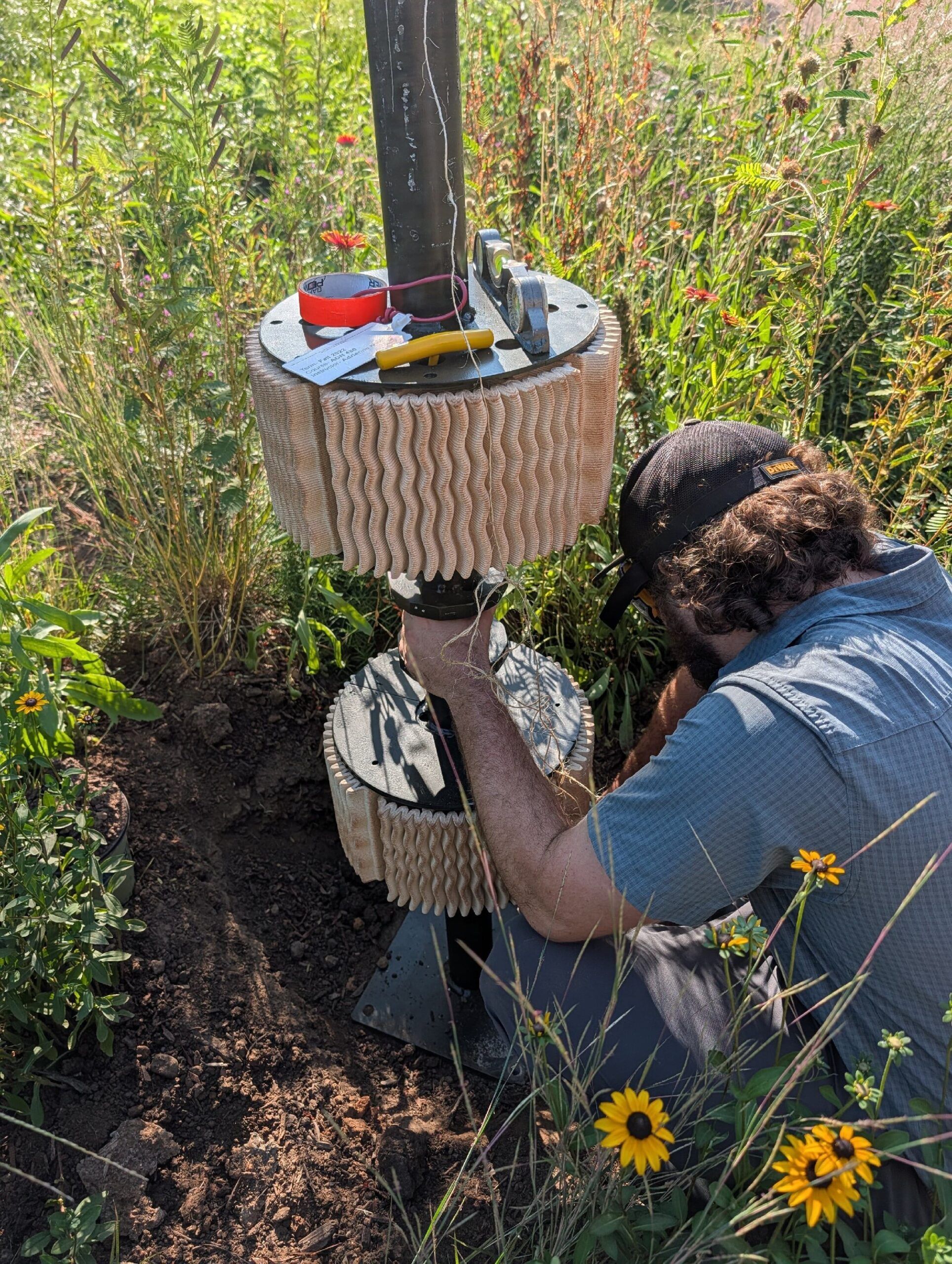
The ceramic bee-hotel pillars began as an exploration of form, texture, and the possibilities of large-scale clay printing. Through experiments with printing techniques, the team chose a wave pattern that reinforces the project’s central idea: we are encountering a world organized through wavelengths beyond ordinary human sight. The resulting modules function as experimental solitary-bee homes, pairing digital fabrication with an invitation to support and learn from native pollinators.
3. CNC Machining
Digital fabrication gave the flower its precision at multiple scales: CNC plasma cutting shaped the large petal pieces, while a CNC waterjet produced smaller, detailed components. A CNC drill press created precise, repeatable connection points and a field of perforations across the petals. These openings allude to ultraviolet nectar guides, visually drawing the eye toward the flower’s center.
4. Folding and Rod Bending
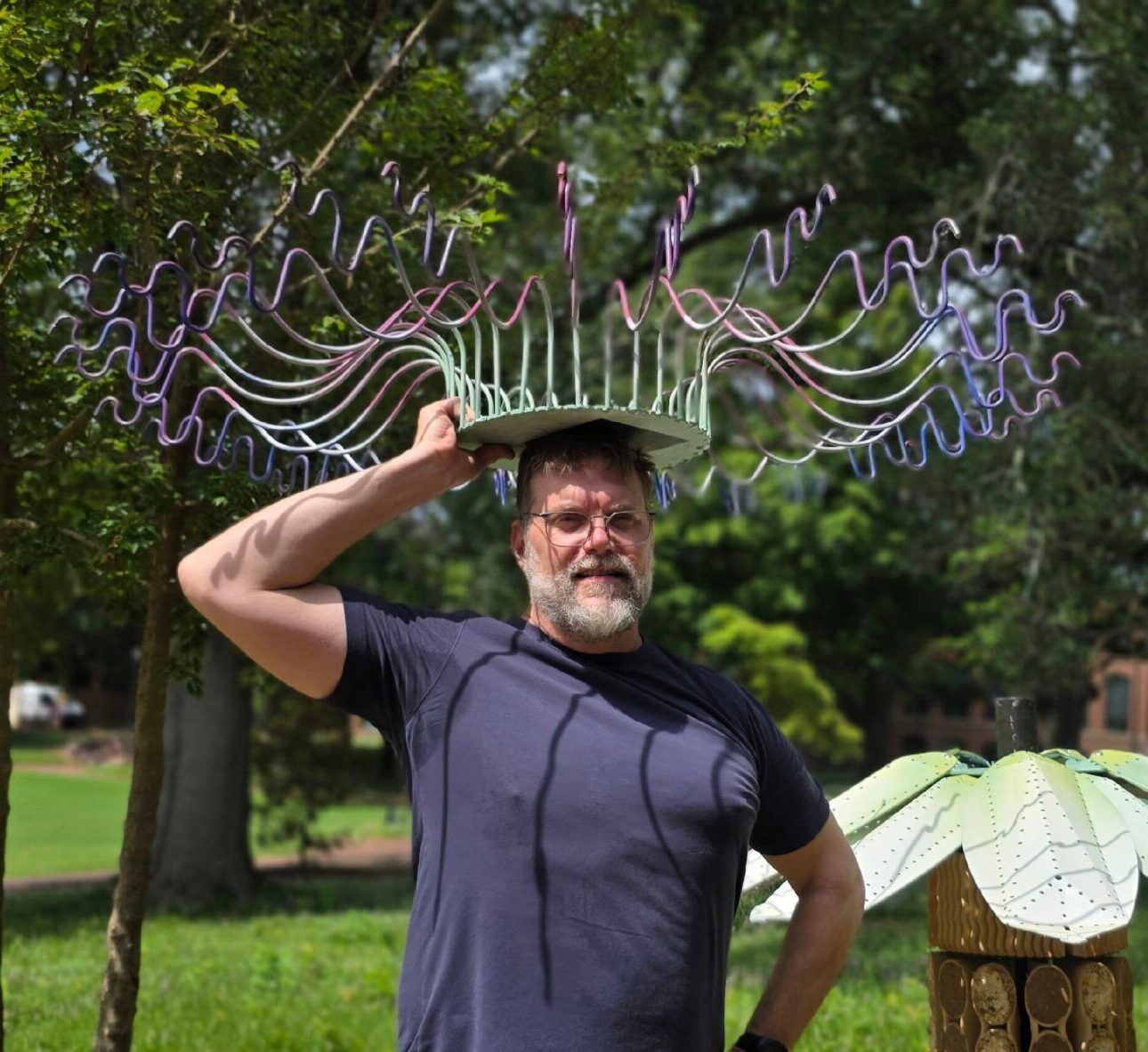
Before fabrication, the flower’s folds were tested through cardboard models and SketchUp studies. The final metal petals were partially hand-folded, partially formed with a hydraulic press and custom jig, maintaining consistency while preserving the small variations of handwork. Steel rods were then bent into the radiating corona, extending the flower’s structure outward and framing its illuminated center.
5. Welding
Welding brought the flower’s individual components into one structural whole. The bent steel rods, anthers, stamens, and central elements were joined to create the flower’s expressive reproductive anatomy. Through this assembly, delicate botanical structures were translated into a durable form for public life outdoors.
6. Painting and Illumination
After priming and painting, the sculpture received a final layer of invisible ultraviolet paint. In daylight, this fluorescent layer is nearly imperceptible, allowing the flower’s visible colors and material form to lead. At night, the ultraviolet light turns on and reveals the fluorescence; an atmospheric echo of the hidden signals that guide pollinators toward a flower.
7. Construction and Presentation
At installation, the ceramic modules, aluminum flower forms, ultraviolet lighting, and native planting come together as one living landscape intervention. The project is designed to be encountered over time: as a campus landmark, a prompt for conversation, a habitat resource, and a nighttime event. Bee Vision asks visitors not simply to look at a flower, but to imagine what it might mean to see the world through another species’ eyes.
The Living Garden
Explore and Participate
Meet the Team
Maryam Badiei
Corresponding Author PhD student North Carolina State University College of Design Raleigh, NC, USA
Sheppard Byles
Graduate Student
North Carolina State University
Raleigh, NC, USA
Dr. Hassan Pishahang
Postdoctoral Researcher Harvard University
Cambridge, MA, USA
Christian Karkow
Specialty Trades Technician North Carolina State University College of Design
Raleigh, NC, USA
Dr. Nilda Cosco
Research Professor
North Carolina State University Natural Learning Initiative
Raleigh, NC, USA
Robin C. Moore
Professor Emeritus
North Carolina State University Natural Learning Initiative Raleigh, NC, USA
Matthew Babb
UX/communication designer North Carolina State University Natural Learning Initiative Raleigh, NC, USA
Shawn Protz
Assistant Professor of Architecture
North Carolina State University College of Design
Raleigh, NC, USA