Brooklyn Bridge Park: Michael Van Valkenburgh Associates
Brooklyn Bridge Park, just published, frames an amazing 40-year story of community persistence in regenerating the East River waterfront and the 23-year design and phased construction process led by Michael Van Valkenburg Associates (MVVA), with NLI on the team, to become a celebrated urban park and a model of community-driven landscape architecture’s regenerative power to create public places integrating people and nature––otherwise known as biophilic design.
Once a vital shipping hub and warehouse district, the site served NYC from the early 1800s until its closure in 1984. That same year, a citizen movement began contesting plans to sell off the waterfront for development and gradually gained momentum and influence. The Downtown Brooklyn Waterfront Local Development Corporation was established and, via extensive community engagement, produced a park master plan (2000). Once adopted, implementation began, including the appointment of MVVA as lead consultant (2004).
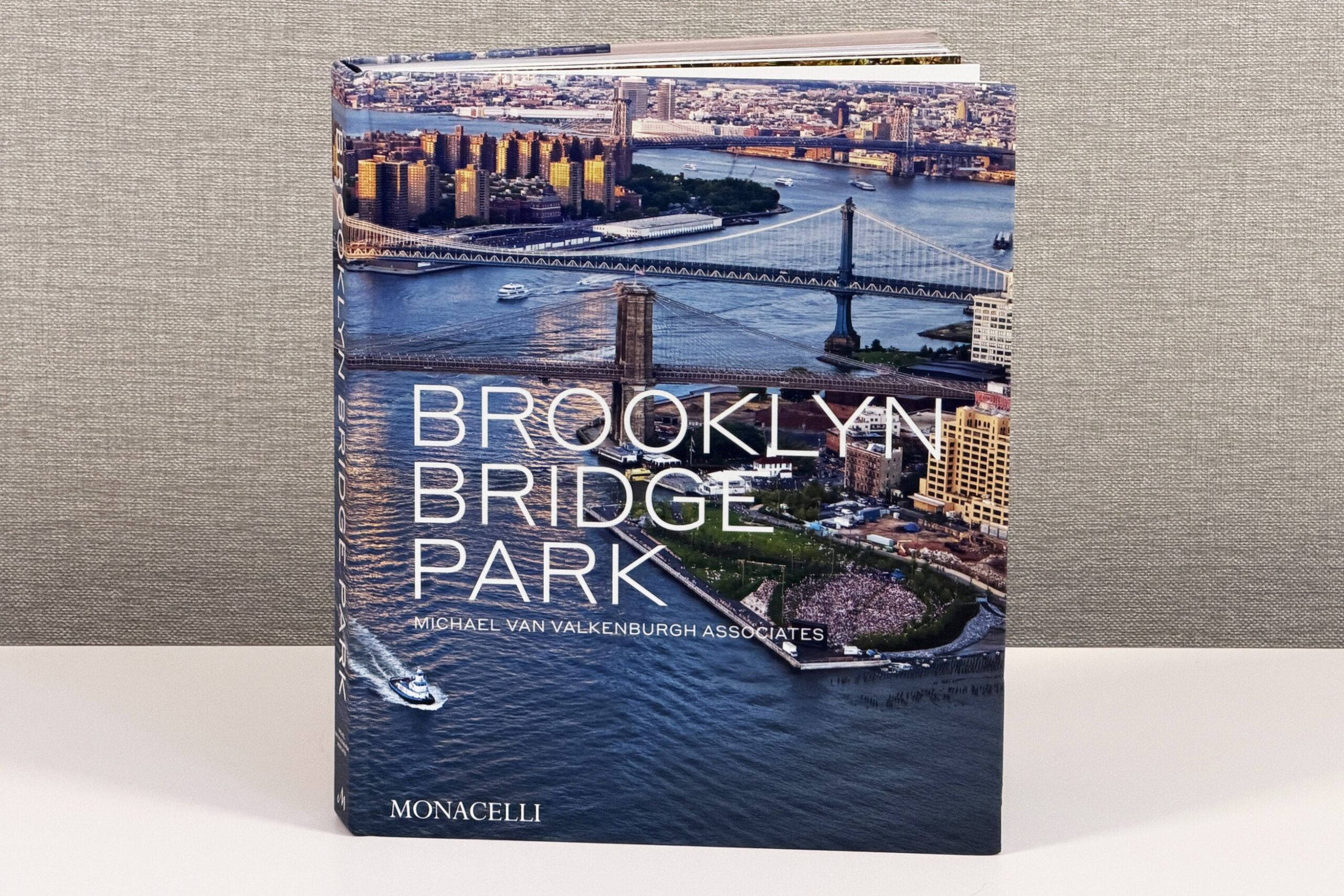
Brooklyn Bridge Park: Michael Van Valkenburgh Associates. Buy online directly from the publisher, Phaidon (hardback, $48).
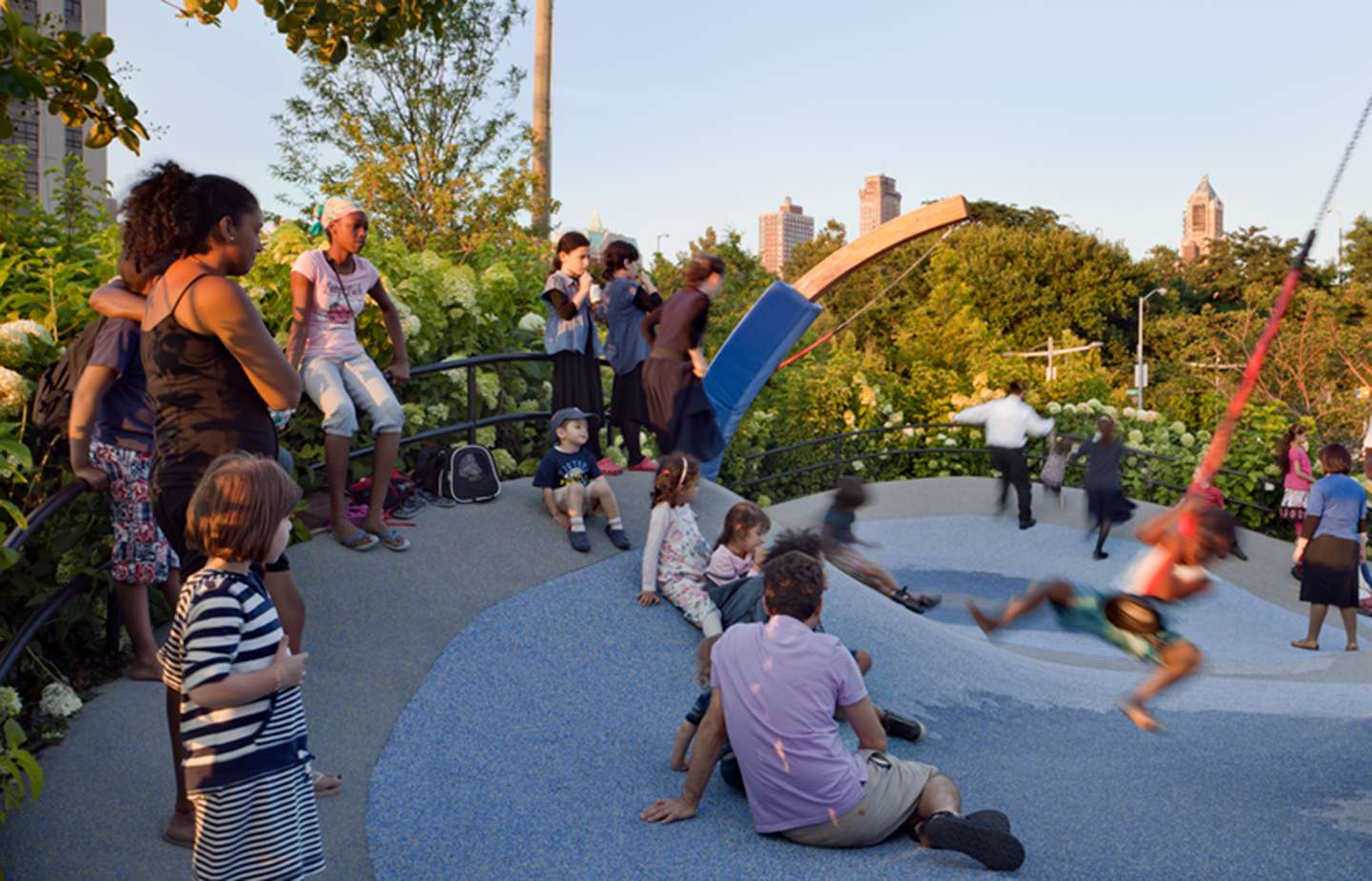
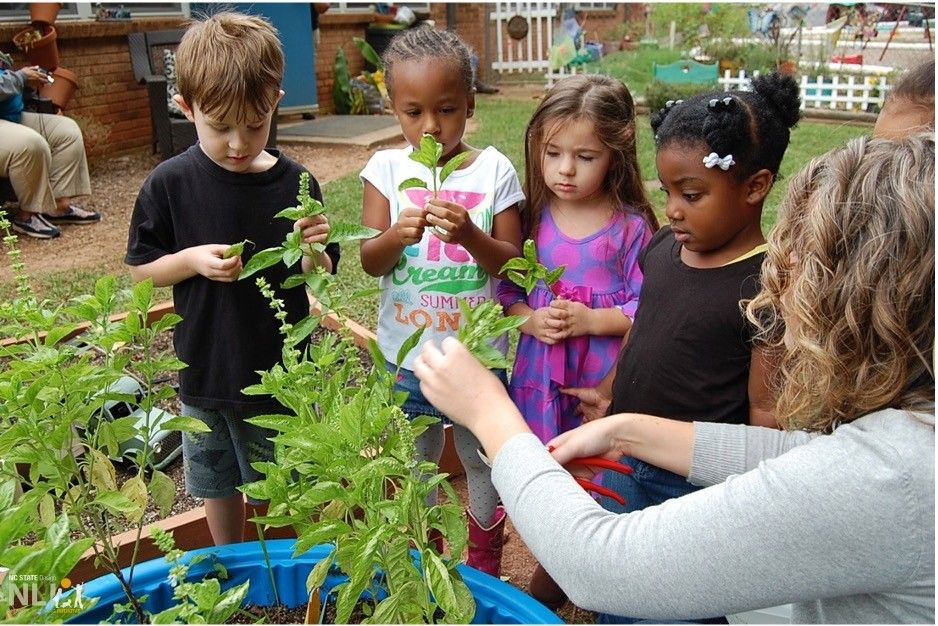
The Brooklyn Bridge Park book emphasises the park as a place for play, describing how landscape design can support and expand play repertoires that impact child development and how NLI’s Robin Moore & Nilda Cosco contributed scientific evidence to practice (p. 88):
“In 2004, while our work was underway at Brooklyn Bridge Park, we completed Lower Manhattan’s Teardrop Park, a place shaped entirely for kids and inspired by nature. [It was] the first time MVVA worked with play experts Robin Moore and Nilda Cosco of the Natural Learning Initiative at North Carolina State University’s College of Design. Both inspired a revolution in the way we thought about nature play.
“With Brooklyn Bridge Park’s eighty-five acres, we had the chance to build on Robin and Nilda’s ideas under more varied conditions and on a bigger scale. Our philosophy was that great play spaces need a strong connection to nature, and that inclusive design for children can draw on the complexity of natural environments.
“Integrating play into a landscape provides a sense of belonging for children with all kinds of needs, which a playground defined by freestanding, standardized equipment cannot offer. Together, our team began identifying a spectrum of spaces to serve different personalities and play styles—from central, highly visible areas for children who want to direct their energy outward to sheltered nooks at the edges for those seeking calm or interaction with smaller groups.
“Robin and Nilda told us that a successful play environment requires caregivers’ cooperation too. To create somewhere that adults would want to return to, we provided a range of sitting options that allow them to be as involved or as hands-off as they please. When these spaces are part of a holistic landscape, they can overlap and diverge seamlessly so that participants can find the comfort level and move in and out of each zone with ease.”
Brookland Bridge Park, the book, contains many insights regarding how park landscape design can liberate human behavior and build community, including children, in ways impossible to replicate in other contexts, richly illustrated with a multitude of photographs. Brookland Bridge Park, the place in real life, is a “must” for NYC visitors!
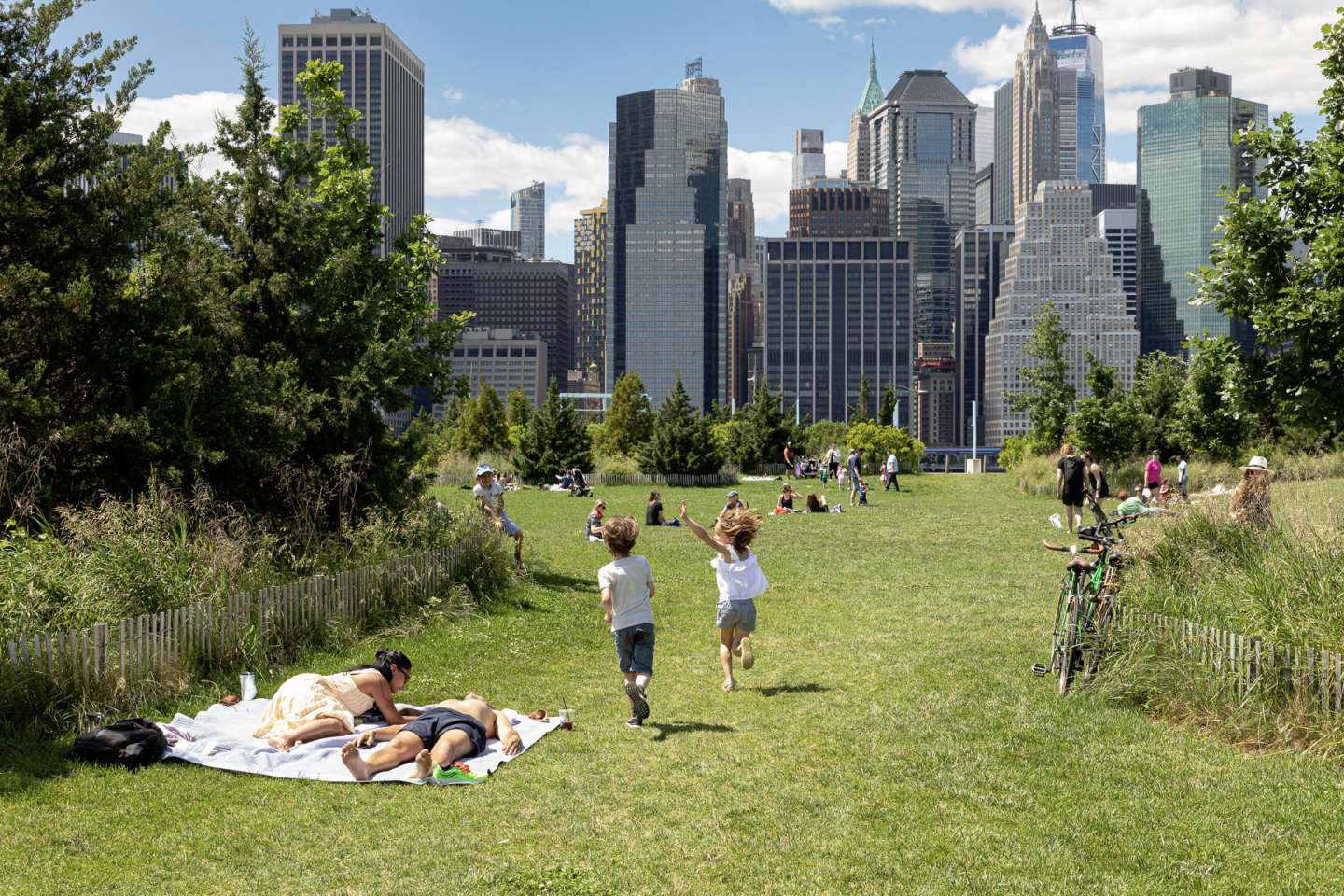
Free-form, intergenerational, high-energy-to-stress-less lawn, with Brooklyn skyline backdrop! Photo credit: MVVA.